
- Before giving blood
- While giving blood
- After giving blood
1
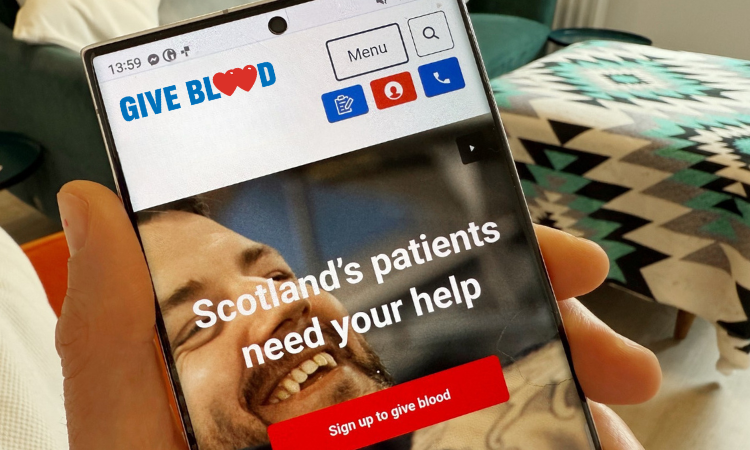
Sign up to save lives
- Setting up your Online Donor Account is the easiest way to manage your appointments – and start making a difference.
- Donated before? If you remember your donor number, you can create your account in just a few clicks. Click the blue register button, follow the instructions and book your next appointment right away.
- New to donating or can’t remember your number? No problem. Just fill out our Contact Us form and select ‘Online donor account registration’ from the dropdown. We’ll get back to you and take you through the process.
- Want to speak to someone? We’re here to help. Give us a call on 0345 90 90 999 and we’ll set up your account and book your appointment at the same time – so you can start saving lives even sooner.
- After you register, we’ll email you a Welcome Pack – make sure you read it before you come to donate.
2
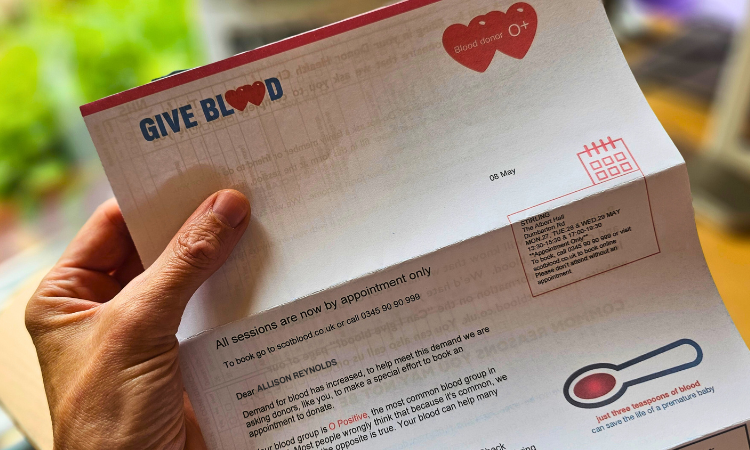
We’ll write
- If you live close to a donor centre, we will usually invite you to donate again in around 16 weeks time – this will largely depend on your blood type and how stocks are looking at that time.
- If you already have an appointment booked, have given blood one to three times before, or have donated at least once in the past year, we’ll send you a paper invite. Otherwise, we’ll reach out digitally when you’re good to go again.
- If you give blood in your community, we’ll invite you to your next local blood donor session. After that we’ll get in touch when we’re in your area.
3
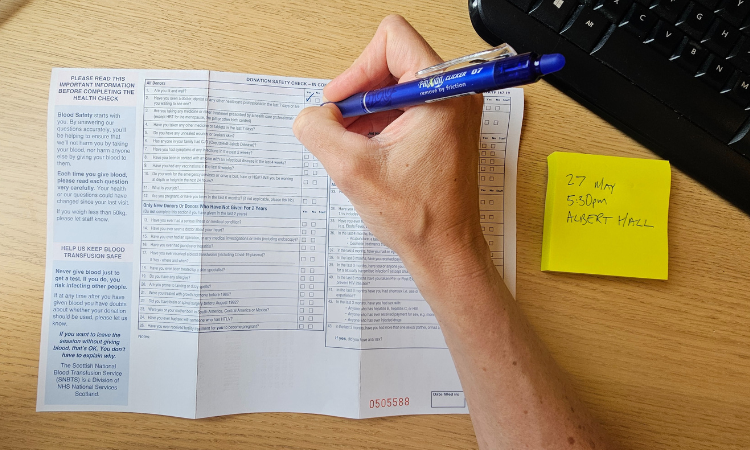
Get ready
- As part of our invite, we send a donor health check form, which goes through your medical, lifestyle and travel history. Fill it in and bring it with you – it’ll save time when you arrive. However, if you lose it or it expires, that’s fine – just come along anyway. We will print you one out when you arrive.
- On the day, check you’re feeling fit and well. Give yourself plenty of time to get to your appointment.
- Before your appointment please make sure you’re well fed and well hydrated
- If you have any questions about your health, travel or lifestyle (or need to cancel or rearrange your appointment), give the donor enquiry line a quick ring on 0345 90 90 999
1
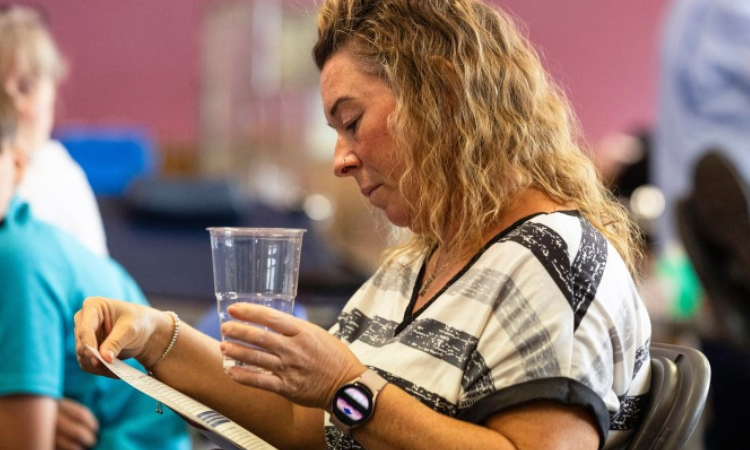
When you arrive
- Whether it’s your first time or your fortieth, you’ll get a warm welcome.
- We’ll take your details and print you out a donor health check form if required
- The health check form goes through your medical, lifestyle and travel history. It’s completely confidential and designed to protect you and the person who receives your blood.
- We’ll give you 500ml of water to drink. This might seem a lot, but we know it will make you less likely to feel faint.
2
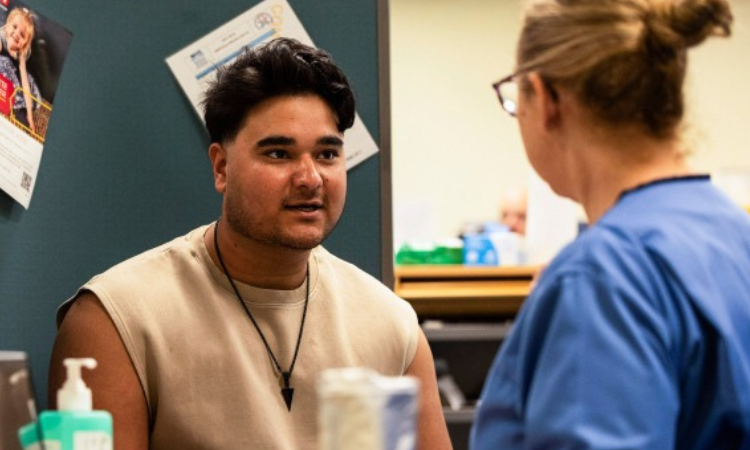
Talk to us
- A staff member will go over your health check form and make sure you’re eligible to donate. You can also ask any questions you might have.
- There are more than 200 rules affecting whether a person is eligible to give blood, and different rules affect eligibility for different lengths of time. If we’re not able to take your blood at this time, we’ll explain why.
3
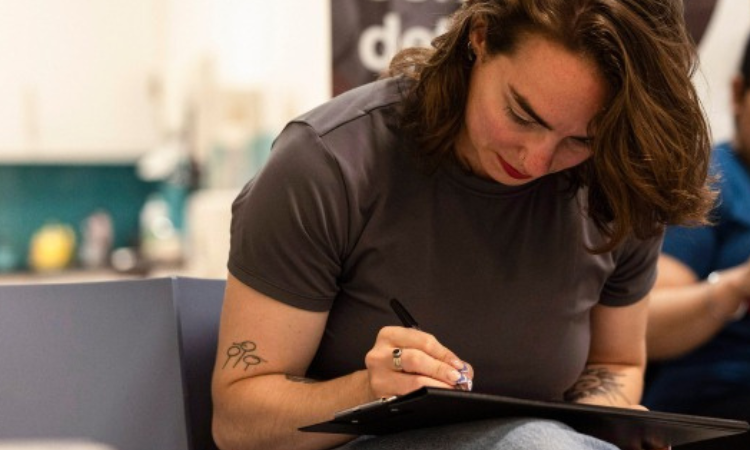
Agree to give blood
- Next, read the donor consent statement.
- This is a legal requirement to show you understand what’s involved in giving blood. If you agree, sign it.
- If you decide you don’t want to give blood, you can leave at any time, no questions asked.
4
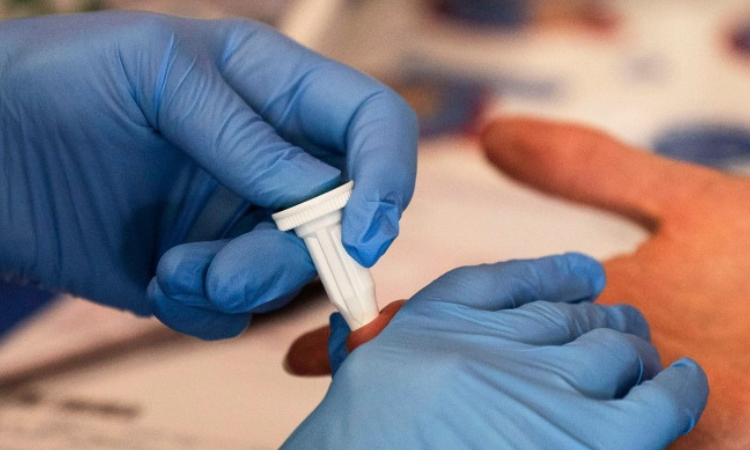
Finger prick test
- Finally, we test a small drop of blood from your finger to make sure you’re not anaemic.
- If the test shows enough haemoglobin (a protein which contains iron), you can give blood.
- If your haemoglobin seems low, another small blood sample may be taken from your arm and tested.
- If this second test meets requirements you should be able to give blood. If not, we’ll advise you on what to do next.
5
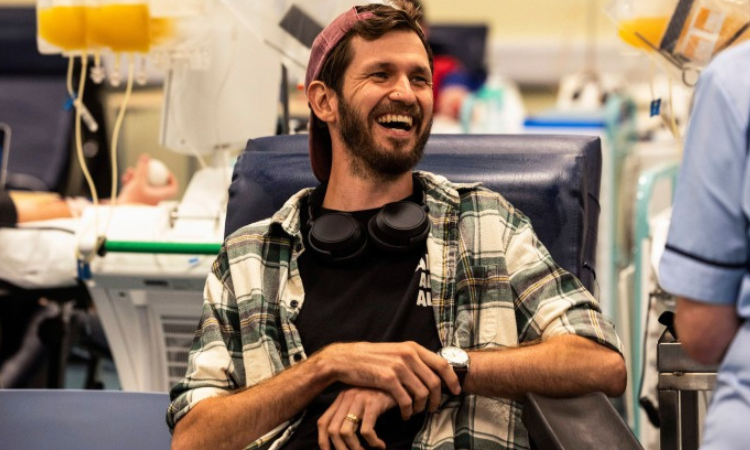
Exercise for success
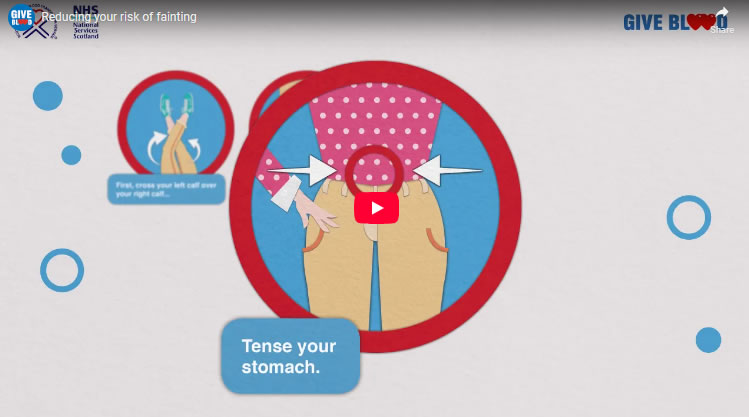
Muscle tensing exercises help maintain your blood pressure and can prevent you from feeling lightheaded. Follow these simple exercises before the needle goes in, before the needle comes out, before getting off the bed or at any time you feel unwell:
- Cross your legs
- Press your thighs together and tense your abdominal muscles
- At the same time stretch your ankles so that your toes point towards you
- Hold this position for five seconds then relax for five seconds
- Repeat five times on this side
- Now re-cross your legs the other way, and repeat.
Watch our “Reducing your risk of fainting” video over on our YouTube channel.
6
Give blood
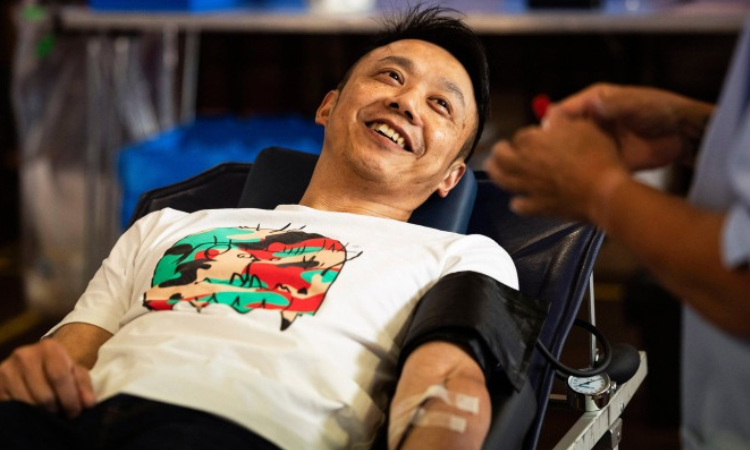
- When you’re ready, we’ll put a pressure cuff round your upper arm, clean the crook of your elbow with antiseptic, then insert the needle. This leads to a blood bag, which sits on a scale beside you.
- These scales constantly weigh and monitor your donation, and will stop automatically when you’ve given enough blood.
- It usually only takes 5-15 minutes to donate a full unit of blood. As part of this process we set aside a few small samples of blood for testing.
- While you’re giving blood, you can read, chat, or just have a daydream. We’ll keep an eye on you to make sure you’re OK.
- When you’re done, we’ll take the needle out carefully, and put on a sterile dressing.
7
Take it easy
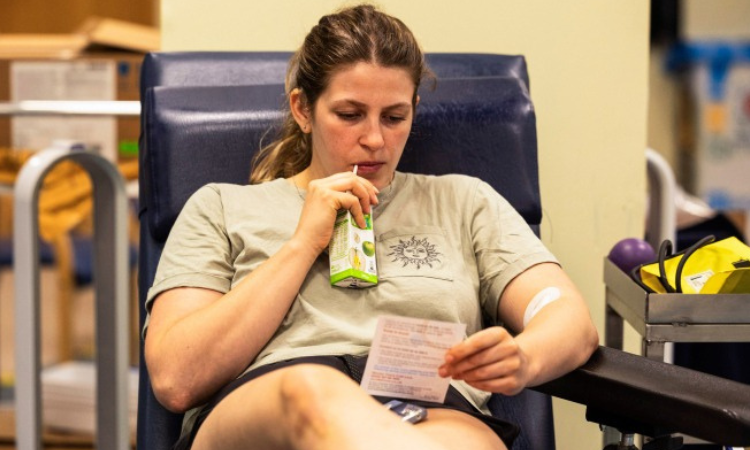
- Rest on the bed for a while after your donation is complete. One of the staff will bring you a snack and a cold drink – everyone knows this is the best bit!
- It takes around an hour to give blood. However, you can bask in the knowledge you’re a lifesaver for as long as you want.
- If you feel unwell or suffer any discomfort or problems after giving blood, or if you have doubts about whether your blood should be used for patients, please let us know on 0345 90 90 999
Reducing your risk of fainting
1
Immediately afterwards
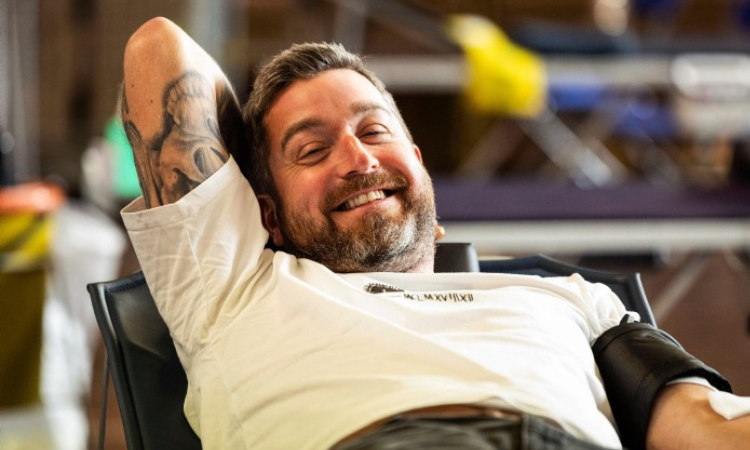
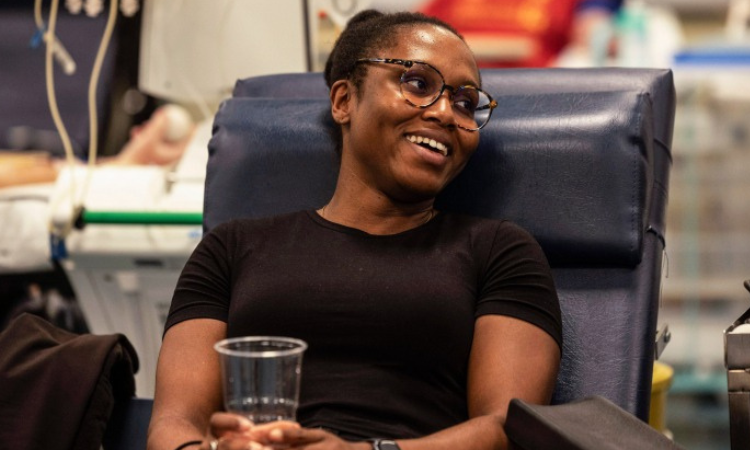
- Most people feel fine after donating blood – in fact, you’re likely to feel pretty good about yourself. However, if you do feel faint, sore or ill, let us know.
2
After you leave
- Look after yourself for the rest of the day.
- Drink plenty of water over the next few hours, and don’t forget to eat.
- Avoid strenuous exercise, hazardous activities, prolonged standing or hot baths, as these can make you feel faint.
- You can take the dressing off your arm after a couple of hours, but avoid heavy lifting for the rest of the day.
- Don’t take part in any hazardous activities, as you may have less energy and concentration than usual.
- Avoid drinking too much alcohol, as this will add to the effects of losing a unit of blood
- We recommend you don’t smoke for the first two hours after giving blood, because it can make you feel faint.
3
If you feel unwell
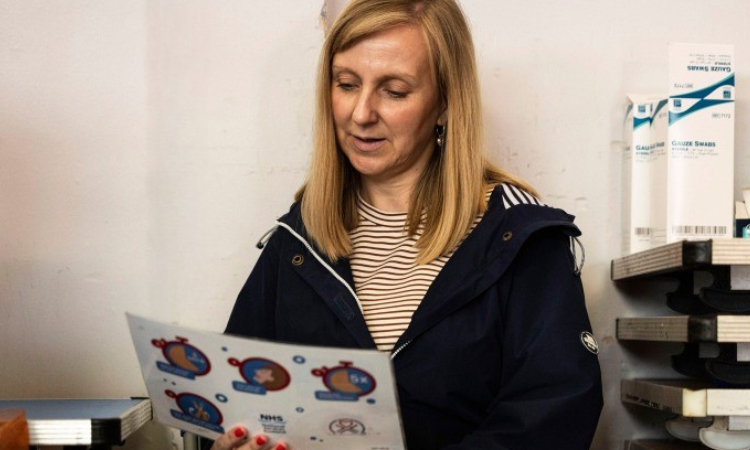
- Sit or lie down straight away.
- Restart muscle tensing exercises.
- Ask a friend or relative to keep an eye on you.
- If you’re driving, pull over and park immediately, then call for help. Don’t drive if you feel unwell.
- Wait for your symptoms to settle before getting up slowly.
- Let us know if you feel unwell after giving blood by ringing the donor advice line on 0345 90 90 999. If you need immediate help contact your GP, NHS24 on 111 or your local A&E. In an emergency, phone 999
- Just so you know, we record if anything goes wrong with blood donation. We do this to improve our procedures and to make sure our donors are as safe as possible. We always investigate severe, unintended and unexpected complications of donation. We follow the Duty of Candour regulations and share our findings with anyone who has been affected.
4
Over the next two weeks
- If you become ill over the next two weeks, it’s extremely important that you let us know. You don’t need to tell us about simple coughs, colds or flu, but other illnesses may mean we can’t use your blood for patients. Call our donor helpline on 0345 90 90 999, or email nss.snbtsenquiry@nhs.scot
5
In 12-16 weeks time
- Keep an eye on your mail, and our blood stocks levels. You’re able to give blood any time now, but we’ll definitely be in touch when stocks of your blood type starts getting low.
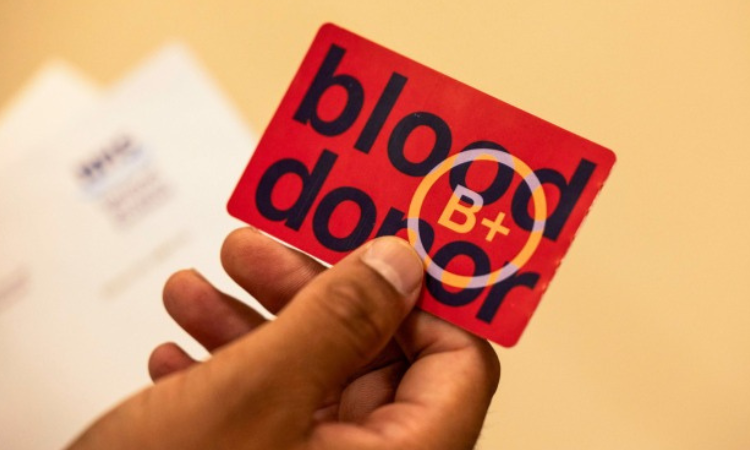
- If you’re a brand new blood donor, we’ll have sent you a donor card with your name, donor number and blood type on it. Bring it with you next time you come to give blood.